
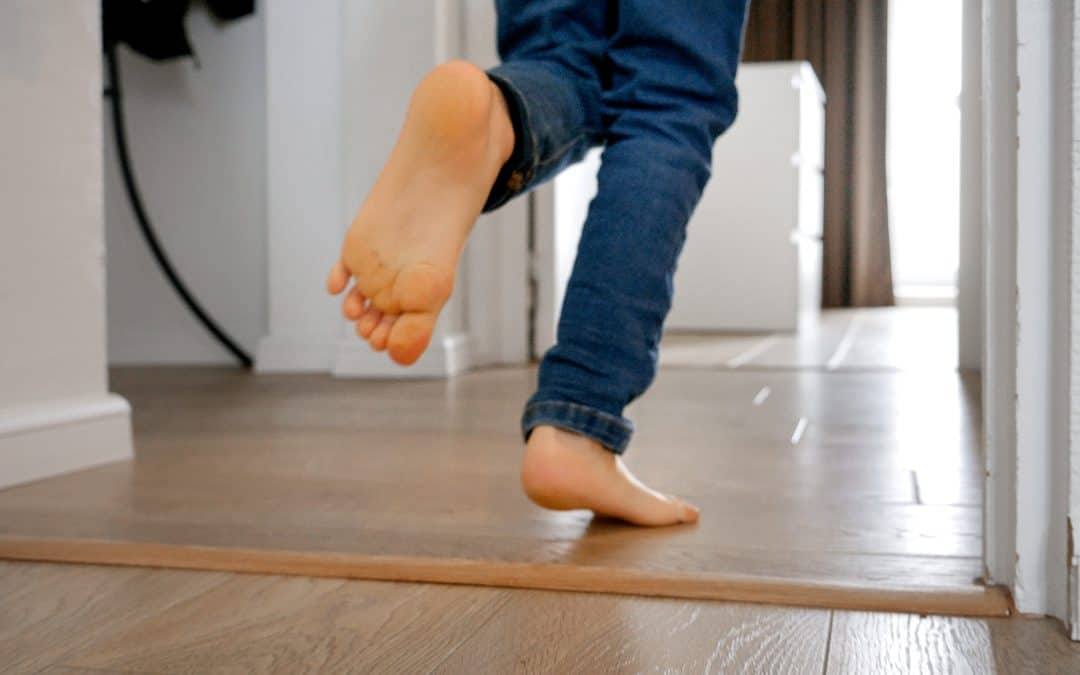
Proper Floor Transitioning Between Rooms
Thinking about floor transition installation? The right transition strip does more than look finished—it prevents stubbed toes, protects your flooring edges, and helps spaces meet accessibility needs. Here’s how to choose between T-molding, reducers, and ADA-friendly solutions so every doorway and opening feels smooth and safe.
Start with Two Numbers
Before you pick a profile, measure:
- Height difference between the two finished floors (to the nearest millimeter or 1/16″).
- Gap width you must span (often 1″–1.75″, factoring expansion space).
These two numbers determine which transition will work—and how it should be fastened (track, adhesive, or screws).
When to Use T-Molding
Best for: Two surfaces of equal height (e.g., LVP to tile of the same thickness) or small differences you can shim.
Why it works: T-molding bridges the expansion gaps on both sides while protecting exposed edges from chipping. It’s ideal between continuous living areas where you want a clean, minimal look.
Install tip: Snap the T into its metal track centered over the joint; ensure each floor has the required expansion space so the strip doesn’t buckle.
When to Use Reducers
Best for: Stepped transitions where one surface is higher than the other (e.g., hardwood down to vinyl or concrete).
Why it works: A reducer creates a gentle ramp from the high floor to the low floor, eliminating a toe-catching lip and shielding the high edge from damage.
Install tip: Choose a reducer matched to your flooring brand and height. Dry-fit first; if the drop is larger than the profile supports, step up to an overlap reducer or a threshold/mini-ramp designed for bigger changes.
ADA-Friendly Transitions (Accessible & Safer)
Best for: Entries that need barrier-free movement for wheels, walkers, or strollers.
Why it works: ADA-friendly ramps and beveled thresholds soften abrupt height changes and minimize rolling resistance. They often use rubber, aluminum, or rigid PVC with slip-resistant textures.
Install tip: Aim for a gentle slope and flush edges with no sharp lips. In wet areas, choose materials with grip and seal perimeter joints to prevent moisture intrusion. When in doubt, select purpose-built accessibility ramps rather than forcing a standard reducer to do the job.
Other Profiles to Know
- End cap/threshold: Finishes flooring where it meets sliding doors, masonry, or carpet edges.
- Stair nose: Mandatory at stair edges; protects the front of treads and provides a consistent landing for feet.
- Flexible transitions: Handy for curved openings or uneven tile edges.
Pro Measurement Matters
Great transitions look “invisible.” That comes from precise scribing, color/finish matching, and choosing the right attachment method for concrete vs. wood subfloors. A pro will also check door swing clearance so the strip doesn’t scrape.
Thank you for taking the time with me to learn more about what Mr. Done Right, the handyman / contractor does for you.
Sincerely,
Nathaniel Peterson
(AKA) Mr. Done Right
For more information on handyman or contractor work in the greater Austin area (or beyond), please contact your premiere handyman, Nathaniel Peterson, AKA Mr. Done Right Handyman Contractor of Austin, because Mr. Done Right ensures any repairs and/or remodels get Done Right the first time! Call us now for a free estimate! 512-659-8931
Online Marketing Powered by www.OnlineMarketingExperts.agency
* Click here to protect your privacy and safety on the Internet.
Recent Comments